
“Talent is rare in all countries” . This year marks the 100th anniversary of his birth, whose place in the world film world is forever beyond the borders of the country. He is great Bengalee flim maker and writer SATYAJIT RAY.
The creator dies, the creation does not die. Through His creation the Creator lives forever . Satyajit Ray once said, “Talent is rare in all countries.”
Possessing that rare talent himself. This proverbial creator is an institution in itself. In addition to the film, he was an unforgettable celebrity in a multifaceted subject. It can be said that ‘Satyajit Ray’ is a bright chapter and proud name in Indian cultural history.
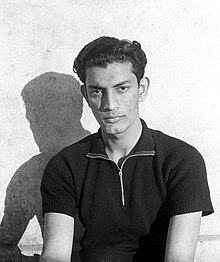
In Bengali, a talented producer like Satyajit Ray has never come before, and there are doubts whether he will come in the future or not. People who love and cherish the film with all their heart can be seen in Kalevedra. Not only is he a filmmaker, he is also known as a screenwriter, art director, music director and writer. He is one of the few people who have made Bengali film famous in the world. Today, Steven Spielberg, James Cameron, Martin Scorsese, Quentin Tarantino, Woody Allen, George Lucas, Francis Ford Capola will be at the top of the list. But even in the last century, if one were asked the names of a few famous filmmakers in the film industry, the name of a Bengali filmmaker would undoubtedly be mentioned in the mouths of many. He is such a shining star who has taken Bengali film and even the film of the entire subcontinent to a different level.
In 2004, he was ranked 13th on the BBC’s list of the greatest Bengalis of all time. The legendary man is Satyajit Ray.
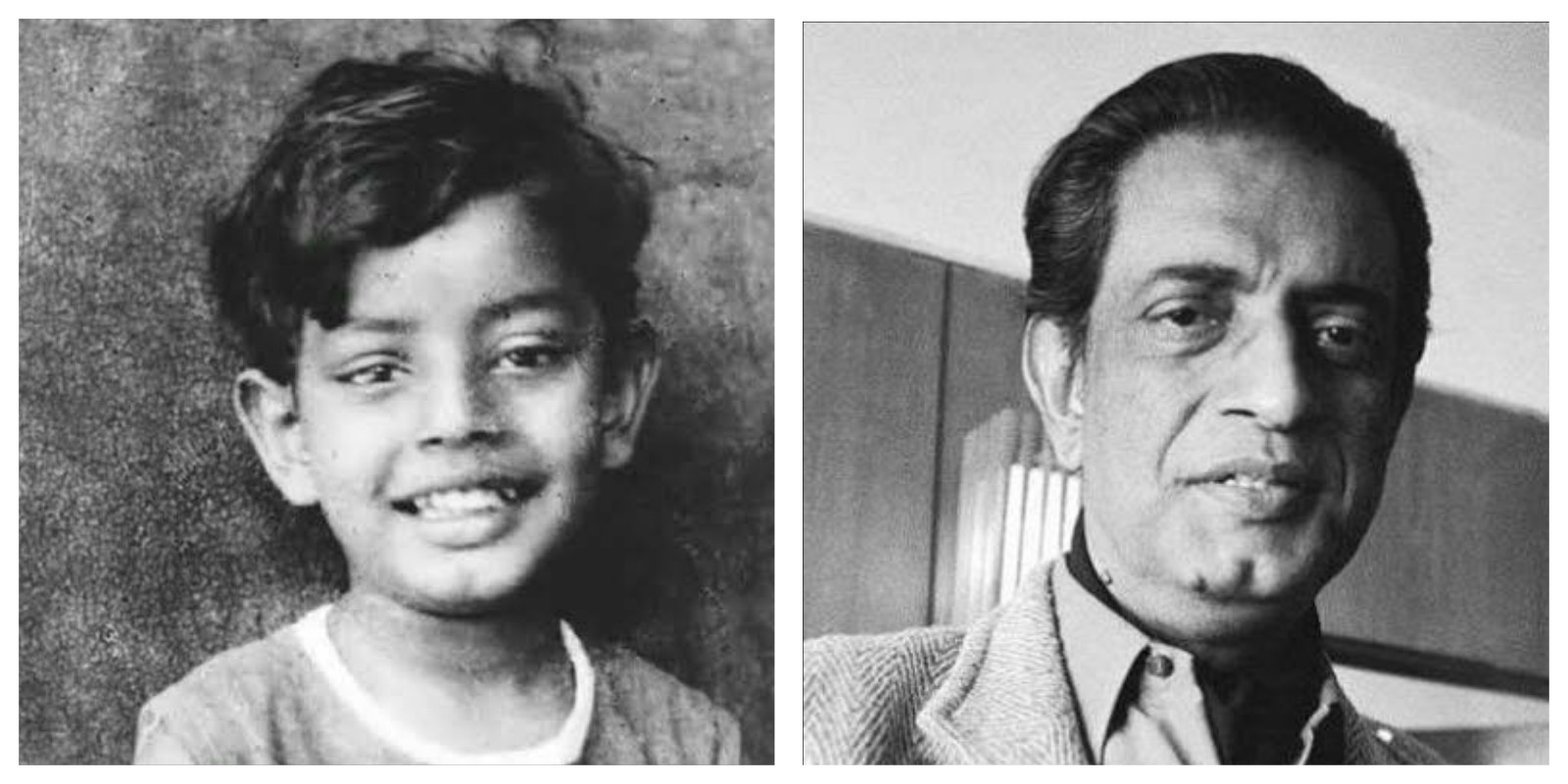
Satyajit Roy was born on 2 May ,1921 in Calcutta (now in kolkata , india) to a renowned Roy family in the literary and art society. His father Sukumar Roy and grandfather Upendrakishore Roy Chowdhury were both shining stars of Bengali literature. Their ancestral home was in Masua village of Katiadi police station in Kishoreganj district of present day Bangladesh. Despite being born into such a rich family, Satyajit Ray’s childhood was not a happy one. He lost his father when he was only three years old. Mother Supravha Devi raised him with great difficulty.
Ray grew up studying economics at Presidency College, Calcutta. Although he always had a weakness for fine arts. In 1940, under the direction of his mother, he was admitted to the Visva-Bharati University established by Rabindranath Tagore at Santiniketan. According to the rules, he was supposed to study Visva-Bharati for five years, but before that he left Santiniketan and moved to Calcutta in 1943,
In this year he joined the British advertising agency DJ Kimer as a “junior visualizer” for only 60 rupees. Painting or visual design was one of Ray’s favorite subjects and he was quite respected in the company. However, there were tensions between the company’s English and Indian employees due to a number of discriminatory reasons. In 1946, Ray, along with Chidananda Dasgupta and others, founded the Calcutta Film Society. Being a member of the society, he got the opportunity to watch some foreign films. During World War II, he befriended US troops stationed in Calcutta. He would take news of new American films coming to town from them. During this time he came in contact with Norman Claire, a Royal Air Force employee who, like him, loved movies, chess, and Western classical music.
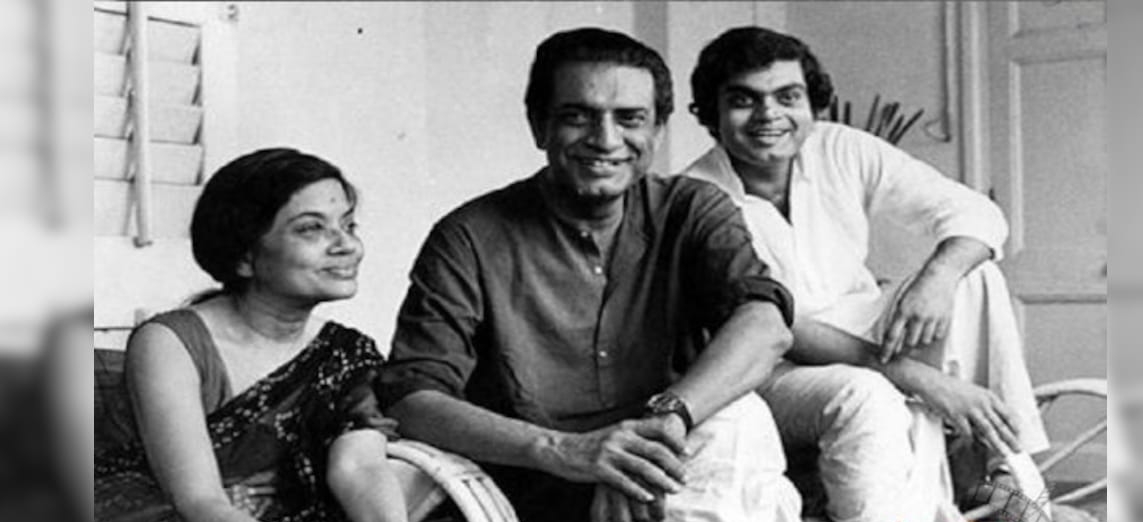
In 1949, Ray married his distant sister and longtime girlfriend Vijaya Das. The son of the Ray couple, Sandeep Roy was born, who himself is now a renowned film director. In 1950, DJ Kimer sent Ray to work at their headquarters in London. During his three months in London, Ray watched about 99 films. Among them was the Italian neo-realist painting Ladri Di Biciclette (Italian: Ladri Di Biciclette, “Bicycle Thief”). Ray later said that after watching the film, he decided to become a filmmaker as soon as he left the cinema hall.
In 1952, he started making famous film Pather Panchali. Due to lack of funds, the production of this film was progressing slowly at that time. The film was completed in 1955 and was released that year. Shortly after its release, the film was critically acclaimed by the audience and won many awards. The film became very popular all over India and even outside India. Pather Panchali won a total of 11 international awards, including the Best Human Document at the Cannes Film Festival. His next two films ‘Aparajit’, ‘Apur Sansar’ and ‘Pather Panchali’ – these three films together are known as ‘Apu Trilogy’. The success of ‘Aparajit’ made Satyajit Ray more known in the international arena. The film also won the Golden Lion Award in Venice. Ray made two more films before finishing the Apu trilogy. The first of these was a humorous film called ‘Parashpathar’. The next was the ‘Jalsaghar’ built on the decline of the zamindari system. Apart from this, Satyajit Ray’s films on various social issues are ‘Devi’ (1960), ‘Tin Kanya’ (1981) and ‘Abhiyan’ (1982).
In 1972, Ray made the first original color film based on the original screenplay, Kanchenjunga. He made this complex and musical film based on the story of an afternoon spent with an affluent family in a hilly area of Darjeeling.
In 1974, Ray created ‘Charulata’. Which was a successful picture of his career. The film is based on Rabindranath Tagore’s short story ‘Nastaneer’ and tells the story of his feelings towards a lonely 19th century Bengali bride Charu and Thakurpo Amal in real life. His notable works include Nayak (1976), Pratidwandbi (1960), Seemadbaddha (1971) and Jan Aranya (1985).
Apart from Bengali films, Satyajit Ray made a Hindi film in 1986 called ‘Shataranj Ki Khiladi’ based on Hindi and Urdu dialogues. This was Satyajit Ray’s first film made in a language other than Bengali. Not only that, ‘Shataranj Ki Khiladi’ is the most expensive and star-studded film made by Satyajit Ray. The film stars Sanjeev Kumar, Saeed Jafri, Amjad Khan, Shabana Azmi, Victor Banerjee and Richard Attenborough. Later, Satyajit made a one-hour film in Hindi called ‘Sadagati’ based on Premchand’s story.
Satyajit Ray suffered a heart attack in 1983 while working on a film. Then the speed of his work slowed down. Due to the deteriorating health of his son Sandeep Roy, Satyajit Ray completed the production of the film ‘Ghare Baire’ in 1974. In 1967, Ray made a documentary about his father Sukumar Roy. His last three films relied on much more dialogue than the earlier films. The films are ‘Ganashatru’ (1989), ‘Shakhaprashakha’ (1990) and ‘Agantuk’ (1991).
Japanese film director Akira Kurosawa once said while evaluating filmmaker Ray – ‘It is the same thing not to see Sri raya’s picture and to survive without seeing the moon and sun on earth. The breadth and depth of Ray’s 37 films (29 full-length films, 5 documentaries and 2 short films) as a director in his thirty-seven-year career undoubtedly demands a separate and thorough analytical discussion. Whether in need of photography or as an independent artist – his free and skillful movement in various fields of fine arts like decoration, costume and graphic designing, screenwriting and literary composition, editing or composition, his unique and successful identity as a worthy successor of the Roy Chowdhury / Roy family, Even on the day of his birth centenary, his presence has made Ray equally relevant and equally modern. Robin Wood, an English film critic, thinks that any scene in Ray’s film can be written as a whole article with a small moment. Although it is not possible to adequately analyze all the pictures of Ray in the long run, the main theme of his creation from the very beginning is that it echoes the ‘vastness and serenity of flowing river’ in the tune of ‘keen observation of human life, calm yet deep sense of life and human love’ (first picture ‘Pather Panchali’). Kurosawa in the context), his resh match in the statement of Oscar honors received at the end of life.
The narrative of Satyajit’s film is more interested in bringing to the screen the unseen, neglected emotions-aspirations-consciousness instincts behind the events instead of the sequence of events. Perhaps that is why the main characters of Satyajit’s films, despite being Bengali, and the language of all the other films except two, being Bengali, are not limited to cultural, linguistic, historical regionalism.
He has one place not only in the minds of Bengalis but also in the minds of the whole world. His name will come first among the popular film directors of the world. The journey from ‘Pather Panchali’ to ‘Gupi Gain Bagha Bain’ to ‘Aguntuk’ was no less difficult. Not only is he a filmmaker, he is also known as a screenwriter, art director, music director and writer. He is one of the few people who have made Bengali film famous in the world.
He is known as a film director, producer, screenwriter, writer, music director and lyricist. Besides, there is no need to tell the Bengalis about the book written by him. His literary value was no less than that of any of his contemporaries. On the contrary, in some cases, Ray has surpassed his contemporaries. Ray’s immortal creation ‘Feluda’ has been carrying the signature of his creativity from age to age. He has won many national and international awards in his colorful career. He is the second film personality to be awarded an honorary doctorate by Oxford University authorities.
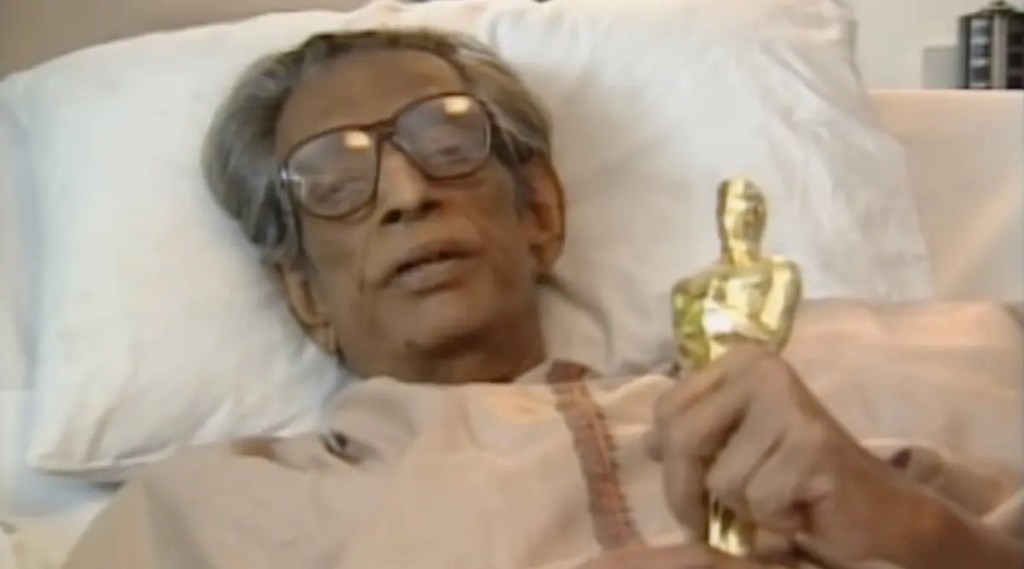
In 1987, the French government awarded Ray the Legion of Honor. In 1975, he was awarded the Dadasaheb Phalke, India’s highest film award. Shortly before his death in 1992, he was awarded the Lifetime Achievement Award by the Academy of Motion Picture Arts and Sciences.In 1992, Shortly before his death, the Government of India awarded him the Bharat Ratna. After his death, he was posthumously awarded the Akira Kurosawa Prize. He got padma shri in 1958 and padma Bhushan in 1965 by indian government.
Death is a very natural thing. Death is inevitable if born. Yet some deaths are painful, hard to accept. People cry at the death of legends. One such legend is Satyajit Ray. The whole city and the whole country became speechless due to his great love. At his funeral, thousands of people sang: ‘Maharaja, salutations to you! Legendary filmmaker Satyajit Ray left for the land of no return on April 23, 1992. And leave his outstanding creations for the rest of the world. His films, literature, paintings – Bengali literature and culture are forever indebted to him for everything. Through his death, an infinite void has been created in both the field of film and literature. Today, even after so many years, that void has not been completely filled. He lives in His creation. Before his death, the director received the biggest award in the film world. However, no matter how new the world of Bengali film is, it is not possible to walk one step ignoring Satyajit Ray. His birthday always carries a different meaning for Bengalis.
★ References: – Anandabazar Patrika, Bengali News18.com, Jugantar, NTVBD.com and other sources.
 Mechanical mantra